
DARLEEN
The brave and gentle Ukrainian flax fiber
A WIN-WIN partnership with the Ukrainian farmers
The DARLEEN’s goal is to promote and facilitate the culture of plants with fibers, mostly linen-flax, in Ukraine – that was in the past a large producer of flax fibers. In the early 1990’s, Ukraine supplied 15% of the world production of flax fiber – nowadays, less than 0,1%.
The DARLEEN’s business model is to convince the Ukrainian farmers to plant linen-flax, one of the most beneficial culture in Western Europe, both for its profitability and for its ability to improve the soil and to successfully develop a durable agriculture.
DARLEEN would offer to the Ukrainian farmers firm agreements to supply them with quality certified seeding material, agronomical expertise at all steps, services for the harvesting – retting – bailing and defibring of the flax straw, and guarantees to buy all their production meeting quality requirements.
It is a WIN-WIN partnership – the success of the farmers shall be the success of DARLEEN.
DARLEEN – a partnership created by three agro-experts
Grain alliance
GRAIN ALLIANCE (in Ukraine : the BARICHIVSKA ZERNOVA KOMPANIA) that is cultivating in Ukraine more than 60 000 hectares, owns large grain elevators and has its own fleet of trucks and train wagons, with head office in the city of Berezan in the Kyiv region
Terre de lin
TERRE DE LIN – the largest linen-flax cooperative in the world assuring the selection of most efficient flax varieties in France and their quality multiplication, and contracting with farmers more than 15 000 hectares of linen-flax in Normandy yearly for the production of linseeds and natural fibers
Michel Terestchenko
Michel Terestchenko, former general manager of the firms ELIFIBRE and LINEN OF DESNA, and owner of the company DESNALAND in Hlukhiv in the region of Sumy, having cultivated every year 400 hectares of linen-flax since 2008 and 400 hectares of industrial hemp since 2013, relocating in Zhytomyr region after the massive russian aggression in order to initiate the DARLEEN project in the city of Andruschivka
NATURAL FLAX FIBER
world market
90% of the flax long fibers in the world are produced in Western Europe (France, Belgium and the Netherlands) – those fibers are mostly geared towards the TEXTILE market and exported to very large spinning mills in ASIA (China, India and Japan) or bought by the last three large European flax weaving companies (LINIFICIO in Italy, LIBECO in Belgium, SAFILIN in France). SAFILIN and LIBECO having “daughter- companies” for spinning in Poland are particularly interested in receiving their raw material from Ukraine.
The traditional market for flax fabrics has traditionally always been 50% in the USA, 25% in South America and 25% in Southern Europe – where are living approximately 300 000 people looking for flax fabrics. But in the last 10 years, new markets appeared in Asia (China and India mostly) doubling the volume of this traditional demand for comfortable, elegant and “breathing” clothes. With temperatures climbing always higher, the demand for flax garments is increasing permanently, and nowadays more than 200 000 tons of flax long fibers are consumed every year in the world.
world prices
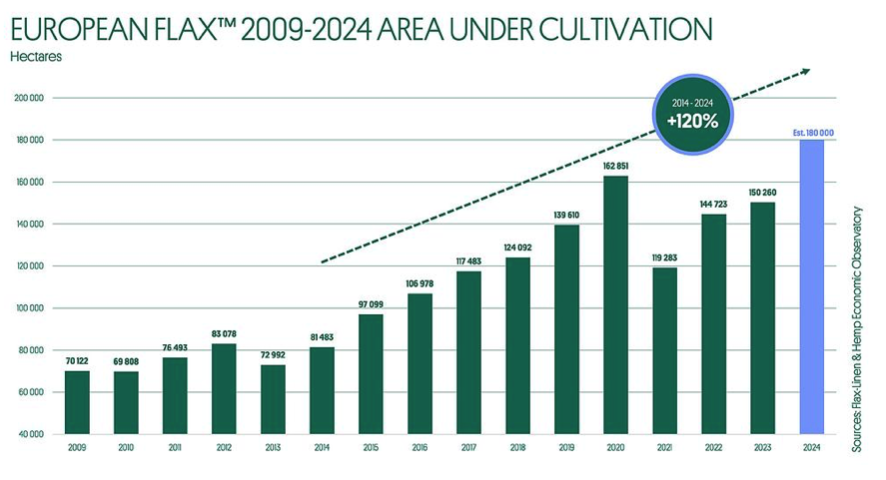
Due to climatic changes with hot and dry periods appearing even in coastal regions of Normandy or Flanders during the summer, the harvests of years 2021, 2022 and 2023 were disappointing and a deficit of raw material had been created causing a very fast increase in price for the flax fibers, going from 2 EUR per kilo in 2020 up to 9 EUR per kilo in 2024. But the harvest 2024 giving 1,2 kilo of long fiber per hectare on record 180 000 hectares in Western Europe came on time to satisfy most of the demand of the world market, and prices for long fibers went down quickly stabilizing between 3,5 and 4,5 EUR per kilo.
We could also note that natural flax fibers are covering presently not even 0,5% of the world market for textile fibers, when plastic-made fibers are criticized by ecologists and cotton fibers are damaging the environment because of the huge amount of water that they need. Because of its ecological advantages and durability, the flax fiber should stay in strong demand in the future.
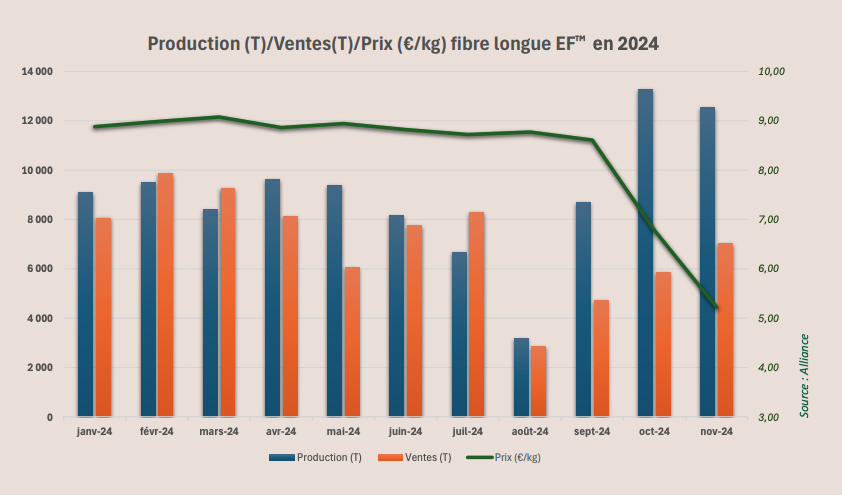
Long Flax Fibers’ Production & Prices (Jan. to Nov. 2024)
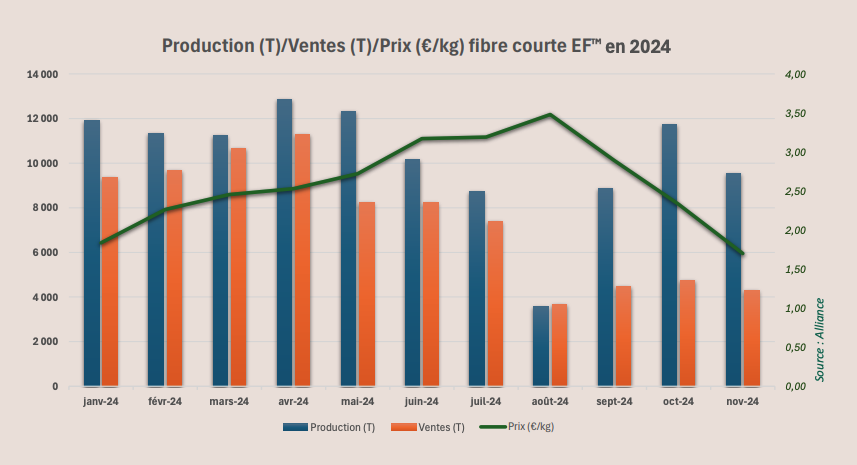
Short Flax Fibers' Production & Prices (Jan. to Nov. 2024)
Why Ukraine?
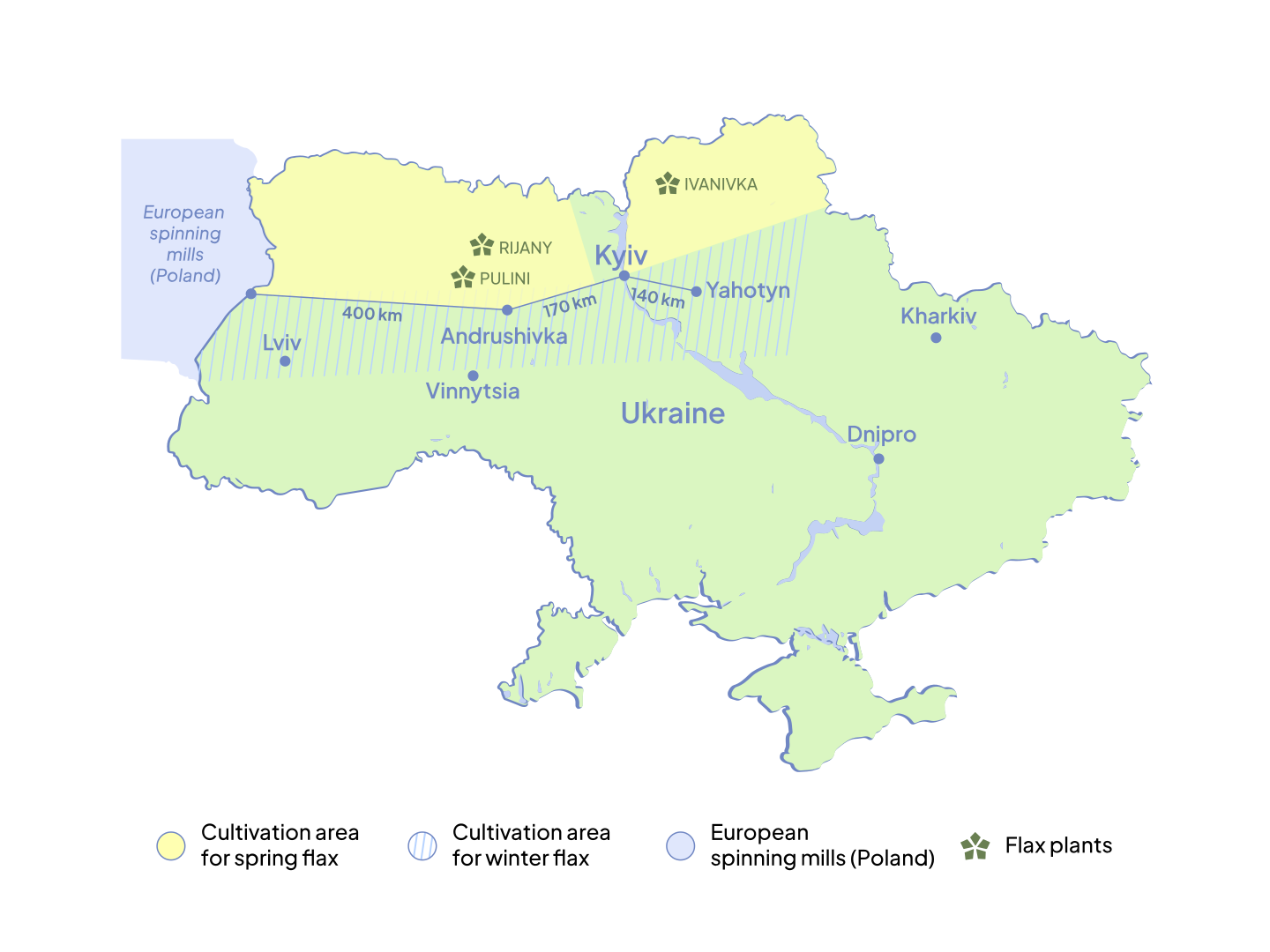
Advantages of Ukraine:
- Rich and fertile lands (chernozem soils), especially around in Andrushivka and Yahotyn regions
- Excellent agricultural expertise especially as the culture of linen-flax has always been a strong Ukrainian tradition
- A highly qualified and highly competitive workforce both for the fields and for the processing plants
- Opportunities for on-site defibring and exporting of only high-value-added fibers
- Simplified export sales to Europe thanks to European policies supporting Ukraine
- An European alternative to the Chinese productions (many brands no longer want to buy fabrics from poorly traceable Asian raw materials)
- Very fast logistics between the Ukrainian flax processing plants and the Polish spinning mills
our offer for farmers
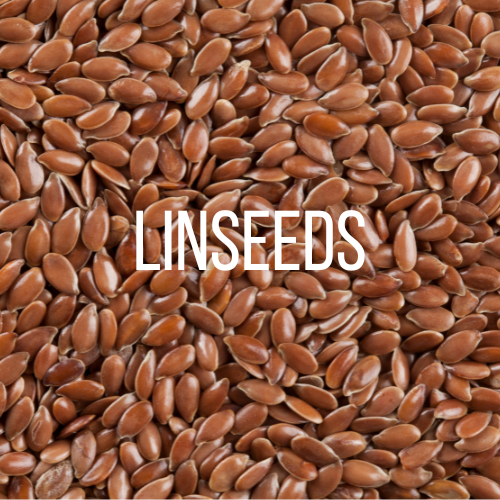
seeding material and agronomical advices
DARLEEN will multiply linseeds in Ukraine, and will offer to the Ukrainian farmers three varieties of LINEN-FLAX created by the French selector TERRE DE LIN – two varieties of WINTER-FLAX : “OLGA” and “TOUNDRA”, and one variety of SPRING-FLAX : “BOLCHOЇ”. Multiplying those seeds R2 from TERRE DE LIN in Ukraine will allow us to lower the acquisition price of this precious seeding material, to check the quality of the R3 seeds obtained in Ukraine, and to deliver them on time for early seeding. R3 seeds will be sold by DARLEEN to the farmers.
After having bought the R3 seeds from DARLEEN, the Ukrainian farmers will benefit from all needed agronomical advices from our agronoms in order to prepare efficiently the flax seeding and cultivation.
agro-services
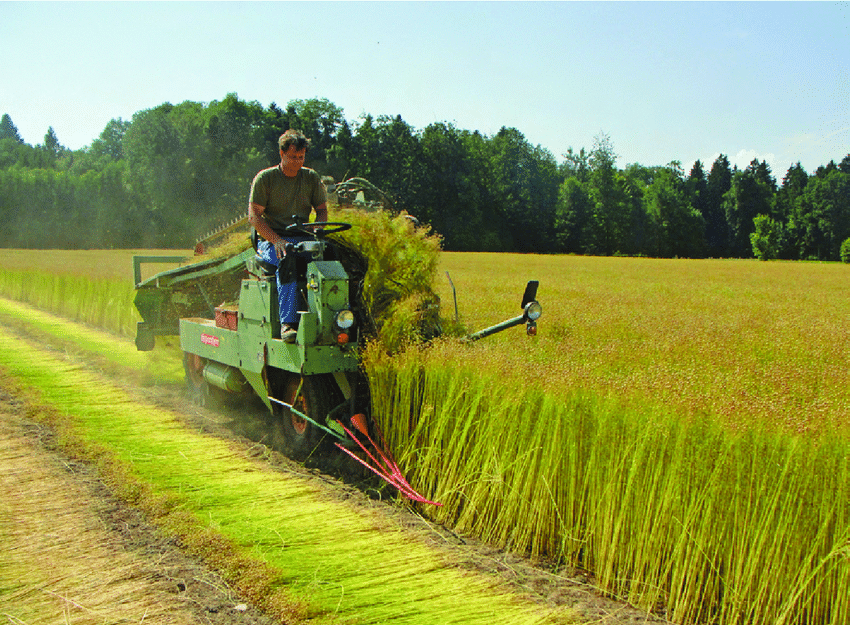
After blooming «blue-blue» («sino-sino ») in the fields at the beginning of the summer, LINEN-FLAX does require specific equipment for its efficient harvest – linen-flax is not cut, but pulled with its roots -, and for its well-managed retting – allowing the bacteries from the humidity (rain or “rosee”) to eat the pectines glueing the fibers around the shives in the fields so the dried straw could be later bailed and “scutched” (fibers separated from the shives) in the mill.
DARLEEN will own the needed specific agro-equipment and offer the pulling, returning and bailing services to the Ukrainian farmers when needed. Those services will be paid by the farmers to DARLEEN.
When bailed, the farmers will sell their harvest to DARLEEN that will pay it according to the quantity and the quality (fiber content) of the dried and retted flax straw delivered.
scutching (defibring)
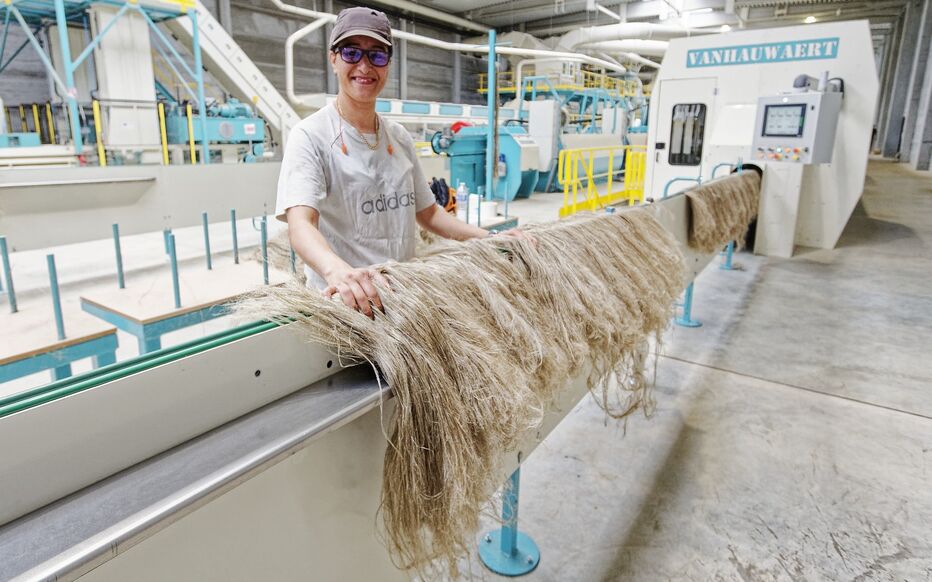
After bailing, the harvested raw material is transported to an existing scutching mill that will process the harvest into long fibers, short fibers and shives under a working agreement negociated between DARLEEN and the mill. DARLEEN will pay the defibring service to the mill, and will market all the fibers (long and short) and by-products (shives, seeds) obtained to the world market.
The spinning mills located in Poland, mostly being daughter-companies of large French, Belgian or Italian weaving mills, are forming the bulk of our potential clients for long as well as for short textile flax fibers. Due to their proximity with Western Ukraine, they are forming a logical market for our productions.